




This Proof of Fraud from 'Maknyuss' Producers

Selasa, 25 Juli 2017 - 19:39 WIB
This Proof of Fraud from 'Maknyuss' Producers
A
A
A
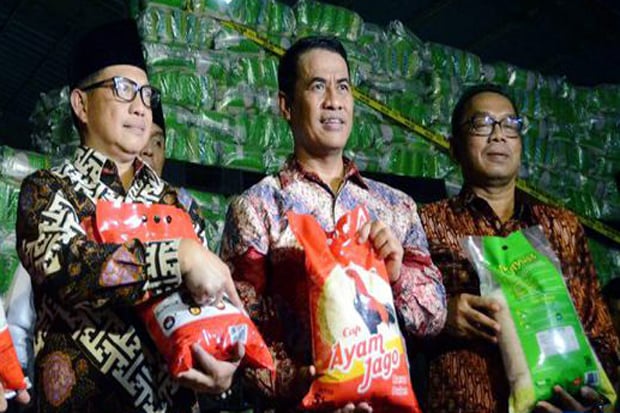
JAKARTA - Ministry of Agriculture (Kementan) discloses evidence that PT Indo Beras Unggul (IBU) fraud practices by applying medium quality rice to premium quality rice. 'Maknyuss' and 'Ayam Jago' branded rice producers are alleged to practice the monopoly of buying grain from farmers at high prices.
Kementan revealed, there are two types of rice-related subsidies, namely input subsidies and output subsidies. The output subsidy is subsidized rice price or called prosperous rice (rastra) for households target (pre-prosperous) which amounts about Rp19.8 trillion. Distribution of one-door literature through State Logistics Agency (Bulog).
"Meanwhile, subsidized rice-related inputs in the form of seed subsidy are around Rp1.3 trillion and fertilizer subsidy Rp31.2 trillion In addition to input subsidies, the government also provides fertilizer, seed, pesticide, agricultural insurance, agricultural machinery and irrigation networks to large farmers tens trillions rupiah," said Minister of Agriculture (Mentan), Andi Amran Sulaiman in Jakarta, Tuesday (25/7).
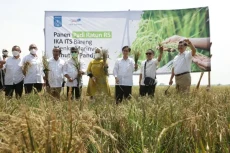
According to him, the rice found in Bekasi belongs to PT IBU is derived from the grain of New Superior Varieties (VUB). Total VUB used by farmers is about 90 percent of the rice harvest area of 15.2 million hectares in a year.
"The farmers preference for these varieties is so high that each new varieties are always termed with the new IR 64. As a result, it is often termed that the new improved variety is a type of IR. Any varieties, farmers generally call it IR type seeds," said Minister of Agriculture.
Amran said that almost all medium and premium rice is derived from grain varieties of VUB produced and sold by farmers in the range of Rp3,500-Rp4,700/kg of grain. Then, the grain is processed into rice in farmers ranging from Rp6,800-Rp7,000 per kg and farmers sell rice ranging Rp7.000/kg and small traders sell Rp7.300/kg to Bulog.
"Grain varieties of VUB from farmers, mills, traders, then processed into premium rice and sold in packs of 5 kg or 10 kg to consumers price of Rp23,000-26.000/kg. This is a disparity of premium rice price between the price at the level of farmers and consumers Ranging from 300 percent," he said.
Based on findings in several supermarkets, Amran added, the price of Ayam Jago type of super fragrant and fragrant pulp in Cilandak supermarket, South Jakarta is Rp25,380/kg and Rp21,678/kg respectively. In Kemayoran supermarket, North Jakarta Rp23.180/kg. Then in Malang Town Square, rooster rice super fragrant pulen reached Rp26.305/kg.
"Meanwhile, other companies buy grain to farmers at relatively the same price, processed into medium rice and sold the normal price of medium average Rp 10,519/kg of rice. It is estimated that this medium rice price disparity at the farmers and consumers Rp3.219/kg or 44 percent," Amran explained.
Meanwhile, Ministry of Trade (Kemendag) admitted to not caring about the statement of PT Indo Beras Unggul (IBU) who denied monopolistic practices and mengoplos medium rice into premium rice. The government even asked Maknyuss branded rice producers to prove themselves in court.
"It's okay for people to disagree, then prove it by law in court," said Secretary General of the Ministry of Trade, Karyanto Suprih at House of Representatives, Jakarta on Tuesday (25/7).
However, Karyanto added, Food Task Force and other law enforcement officers did not conduct the inspection without any basis. 'Maknyuss' rice producers have been targeted by Food Task Force since a few months ago.
"The legal apparatus is not arbitrary, there must be legal basis for such activities and that can answer the food task force," he said.
Previous Food Task Force of National Police conducted a raid on a warehouse owned by PT IBU containing 1,161 tons of rice in Kedungwaringin, Bekasi, West Java. The Food Task Force accused the subsidiary of PT Tiga Pilar Sejahtera Tbk (AISA) has converted the purchased rice for Rp4,900/kg from farmers and into branded rice ie 'Maknyuss' brand at Rp13,700/kg and 'Cap Ayam Jago' Rp20.400/kg.
Kementan revealed, there are two types of rice-related subsidies, namely input subsidies and output subsidies. The output subsidy is subsidized rice price or called prosperous rice (rastra) for households target (pre-prosperous) which amounts about Rp19.8 trillion. Distribution of one-door literature through State Logistics Agency (Bulog).
"Meanwhile, subsidized rice-related inputs in the form of seed subsidy are around Rp1.3 trillion and fertilizer subsidy Rp31.2 trillion In addition to input subsidies, the government also provides fertilizer, seed, pesticide, agricultural insurance, agricultural machinery and irrigation networks to large farmers tens trillions rupiah," said Minister of Agriculture (Mentan), Andi Amran Sulaiman in Jakarta, Tuesday (25/7).
According to him, the rice found in Bekasi belongs to PT IBU is derived from the grain of New Superior Varieties (VUB). Total VUB used by farmers is about 90 percent of the rice harvest area of 15.2 million hectares in a year.
"The farmers preference for these varieties is so high that each new varieties are always termed with the new IR 64. As a result, it is often termed that the new improved variety is a type of IR. Any varieties, farmers generally call it IR type seeds," said Minister of Agriculture.
Amran said that almost all medium and premium rice is derived from grain varieties of VUB produced and sold by farmers in the range of Rp3,500-Rp4,700/kg of grain. Then, the grain is processed into rice in farmers ranging from Rp6,800-Rp7,000 per kg and farmers sell rice ranging Rp7.000/kg and small traders sell Rp7.300/kg to Bulog.
"Grain varieties of VUB from farmers, mills, traders, then processed into premium rice and sold in packs of 5 kg or 10 kg to consumers price of Rp23,000-26.000/kg. This is a disparity of premium rice price between the price at the level of farmers and consumers Ranging from 300 percent," he said.
Based on findings in several supermarkets, Amran added, the price of Ayam Jago type of super fragrant and fragrant pulp in Cilandak supermarket, South Jakarta is Rp25,380/kg and Rp21,678/kg respectively. In Kemayoran supermarket, North Jakarta Rp23.180/kg. Then in Malang Town Square, rooster rice super fragrant pulen reached Rp26.305/kg.
"Meanwhile, other companies buy grain to farmers at relatively the same price, processed into medium rice and sold the normal price of medium average Rp 10,519/kg of rice. It is estimated that this medium rice price disparity at the farmers and consumers Rp3.219/kg or 44 percent," Amran explained.
Meanwhile, Ministry of Trade (Kemendag) admitted to not caring about the statement of PT Indo Beras Unggul (IBU) who denied monopolistic practices and mengoplos medium rice into premium rice. The government even asked Maknyuss branded rice producers to prove themselves in court.
"It's okay for people to disagree, then prove it by law in court," said Secretary General of the Ministry of Trade, Karyanto Suprih at House of Representatives, Jakarta on Tuesday (25/7).
However, Karyanto added, Food Task Force and other law enforcement officers did not conduct the inspection without any basis. 'Maknyuss' rice producers have been targeted by Food Task Force since a few months ago.
"The legal apparatus is not arbitrary, there must be legal basis for such activities and that can answer the food task force," he said.
Previous Food Task Force of National Police conducted a raid on a warehouse owned by PT IBU containing 1,161 tons of rice in Kedungwaringin, Bekasi, West Java. The Food Task Force accused the subsidiary of PT Tiga Pilar Sejahtera Tbk (AISA) has converted the purchased rice for Rp4,900/kg from farmers and into branded rice ie 'Maknyuss' brand at Rp13,700/kg and 'Cap Ayam Jago' Rp20.400/kg.
(rnz)