




Redenomination, When It Started?

Senin, 24 Juli 2017 - 11:08 WIB
Redenomination, When It Started?
A
A
A
by: Candra Fajri Ananda
Professor of Faculty of Economics and Business Universitas Brawijaya
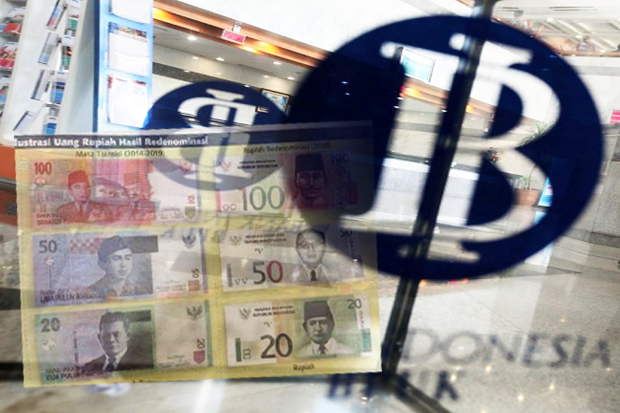
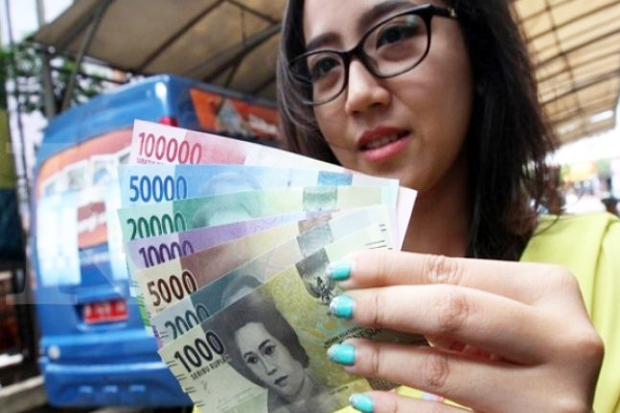
The current condition of the rupiah is assessed by the government and several other economic stakeholders has a greatly missed face value. Unit number is quite long in exchange for the currency of other countries whose exchange rate is stronger. Coordinating Minister for Economic Affairs, Darmin Nasution and Finance Minister, Sri Mulyani Indrawati provide support to Bank Indonesia (BI) to quickly redenominate.
The intended redenomination is the reduction of the nominal value of the rupiah as much as three digits back. The issue of redenomination is currently wrapped much more neatly than when it first stood about 4-5 years ago.
According to the plan, the government fully supports BI's move to propose a Redenomination Rupiah Bill on the National Legislation Program (Prolegnas) of the House of Representatives 2017. Several members of the House seem to have also given the green light for BI to file a Redenomination Bill in Prolegnas 2017.
The government is so warm to respond to the issue of redenominasi rupiah policy because it is considered to increase economic efficiency. When there is redenomination it is assumed the economic transaction process will run more simply. The number of figures listed in the rupiah has been an average of four digits and above, and seems to have been among the longest in the world.
The average international monetary expert concludes, a country with a long digit number of currencies is a country that has experienced hyperinflation. Indonesia had experienced hyperinflation in the mid-1960s and since then inflation has been reduced to consistent below 10 percent.
Case number of rupiah digits long enough sometimes also make our currency becomes less "appreciated" internationally. In addition, it is also sometimes considered troublesome for bookkeeping management.
Let's just imagine, the number of our current state budget has moved above Rp2.000 trillion. In numerical systems, our APBN is defined as reaching the quadrillion level. The process of accounting will indeed be much more effective with redenomination.
The author actually very agree with the government that our economy needs to be supported there redenominasi. However, the current momentum is still not quite ideal and not too urgent to do.
The government and BI are fine if they remain insistent on the condition of inflation. Our inflation rate is already much more restrained than it was a few years ago when the redenomination discourse first appeared.
In addition, BI also justify the current position of the rupiah exchange rate is relatively more stable. The management of the state budget is said to have high credibility and precision to increase investment grade.
However, for the writer, the provision is still not strong enough to be used as a foundation of policy, or even it can seem more dangerous. Our inflation is in a low position. However, the condition of our economy is actually not separated from the fog that tend to cloudy.
Analysts consider the level of people's purchasing power is being disrupted. Our inflation position can be so low as it is driven by a downward demand factor rather than a strong supply side. Thus, the existing empirical conditions seem to be in direct opposition to the assumptions made by the government.
Recently, BPS also launched the latest results related to the development of people's welfare. The number of poor people in Indonesia in March 2017 increased by 6,900 people compared to September 2016. The total of poor people to date reached 27.77 million people or about 10.64 percent of the total population.
Meanwhile, the level of public expenditure inequality as measured by the gini index ratio has decreased very-very thin, only 0.001 points during the period of March 2017 against September 2016. The current position of the gini index ratio we are at the number 0.393. Both indicate that there is a pattern of economic growth that is fragile at once.
The increase in the number of poor people signifies a growing number of people who expenditure (consumption) below the standard expenditure of a month in each region. In fact, the standard of our poverty line is low. Meanwhile, the main strength of Indonesia's economic growth rate comes from household consumption/community.
The position of gini ratio index is still very high compared to 15 years ago, and it shows that there is an unhealthy distribution of wealth in Indonesia. The World Bank also has its own method of measuring the level of inequality of spending by dividing into three categories, ie 40 percent of low-spending population, 40 percent medium expenditure, and 20 percent high expenditure.
People with low expenditure in 2015 accounted for only 17.10 percent of total expenditure (consumption). The rest is controlled by medium-income residents who contribute 34.65 percent and high expenditures, which account for 48.25 percent of total expenditure (BPS, 2016).
From this it is very clear that our economic growth rate is always saved by the consumption of upper middle class society. However, that position illustrates our relatively low level of inclusive economic growth.
What we need to note again, the decline in the gini index ratio in the last two years is whether driven by lower middle-class consumption levels or just the opposite, more due to middle-class society to the top of the "sluggish" due to global and national economic contraction. Because, these two factors are very much different meaning and substance.
![Redenomination, When It Started?]()
Reflect from Some Countries
Although the main objective of redenomination is to simplify the number of figures listed in the rupiah currency, if it reflects on what has happened in some countries, the impact is not quite simple. Countries classified as successful redenomination include Turkey, Germany, Poland, Ukraine, and Romania.
We can also learn from some countries that fail to run redenomination like Russia, Brazil, Argentina, Zimbabwe, and North Korea. These countries inherited some important aspects for Indonesia as the main condition of success in redenomination.
First, there is a need for political and economic stability in a very long time. When viewed from the current conditions, these first two conditions are weighted to be done.
Political situation post-election 2014 tensinya tend to continue to heat up, even the circulation of new money for 2016 emissions is also inseparable from the political issue. Moreover, the next election in 2019 is getting closer so it is predicted more political acrobats happen. While the economic side may soon fluctuate.
The main causes arise from the decline in government subsidies for energy interests resulting in fuel and electricity prices. The existence of society for consumption and production can be greatly disrupted, especially for lower middle class and MSMEs.
The government needs to pay more attention to the existence of MSMEs. The MSME sector sustains 61.41 percent of the total GDP, absorb 96.71 percent of the workforce, and accounts for about 15.37 percent of total non-oil / gas exports in Indonesia (BPS, 2015). Thus, redenomination efforts will be faced with inflation and public purchasing power.
Secondly, there needs to be legitimacy of support from parliament, the private sector, and the community. The failure to implement the redenomination plan in the range 2011-2013 also because there is no support from the House to ratify the Redenomination Bill. The reasons for the DPR at that time were related to political and economic stability which did not adequately support the implementation of redenomination.
Third, the budget is enough to print a new amount of money. The failed redenomination experience in North Korea is due to the unavailability of a new stock of money. BI said the cost of printing and distributing money in all parts of Indonesia is around Rp3.5 trillion per year.
By 2016 yesterday it is not known whether the cost is still close to the average or even higher. Because, as we know last year, BI issued the money for 2016 emissions. The simple question is, will the budget be available in the midst of a dragging state coffers as it currently happens?
Fourth, the importance of education to the community. Education is one of the most important parts to avoid any uncontrollable psychological effects. The first education, the public should be understood the difference between redenominasi with sanering policy completely and its effects on the real value of rupiah.
The two policy differences still tend to be biased for the common people. Then for the second education, the government and BI should teach the community against the danger of illusions of redenomination, especially for traders and producers.
The authors are concerned, traders and producers will "play" the selling price of their products. For example the price after redenominasi should be Rp1 changed to Rp1,5.
Although it looks small, that number is equivalent to an increase from Rp1,000 to Rp1,500 for the present value of money. If accumulated, it can lead to excessive inflation.
And, once again the authors assert, whether the government and BI are really ready with all the possibilities that occur after redenomination policy? If redenomination is not done with careful preparation with environmental conditions and timing that is still less conducive, the result could be even contradictory. Risks will always lurk.
Professor of Faculty of Economics and Business Universitas Brawijaya
The current condition of the rupiah is assessed by the government and several other economic stakeholders has a greatly missed face value. Unit number is quite long in exchange for the currency of other countries whose exchange rate is stronger. Coordinating Minister for Economic Affairs, Darmin Nasution and Finance Minister, Sri Mulyani Indrawati provide support to Bank Indonesia (BI) to quickly redenominate.
The intended redenomination is the reduction of the nominal value of the rupiah as much as three digits back. The issue of redenomination is currently wrapped much more neatly than when it first stood about 4-5 years ago.
According to the plan, the government fully supports BI's move to propose a Redenomination Rupiah Bill on the National Legislation Program (Prolegnas) of the House of Representatives 2017. Several members of the House seem to have also given the green light for BI to file a Redenomination Bill in Prolegnas 2017.
The government is so warm to respond to the issue of redenominasi rupiah policy because it is considered to increase economic efficiency. When there is redenomination it is assumed the economic transaction process will run more simply. The number of figures listed in the rupiah has been an average of four digits and above, and seems to have been among the longest in the world.
The average international monetary expert concludes, a country with a long digit number of currencies is a country that has experienced hyperinflation. Indonesia had experienced hyperinflation in the mid-1960s and since then inflation has been reduced to consistent below 10 percent.
Case number of rupiah digits long enough sometimes also make our currency becomes less "appreciated" internationally. In addition, it is also sometimes considered troublesome for bookkeeping management.
Let's just imagine, the number of our current state budget has moved above Rp2.000 trillion. In numerical systems, our APBN is defined as reaching the quadrillion level. The process of accounting will indeed be much more effective with redenomination.
The author actually very agree with the government that our economy needs to be supported there redenominasi. However, the current momentum is still not quite ideal and not too urgent to do.
The government and BI are fine if they remain insistent on the condition of inflation. Our inflation rate is already much more restrained than it was a few years ago when the redenomination discourse first appeared.
In addition, BI also justify the current position of the rupiah exchange rate is relatively more stable. The management of the state budget is said to have high credibility and precision to increase investment grade.
However, for the writer, the provision is still not strong enough to be used as a foundation of policy, or even it can seem more dangerous. Our inflation is in a low position. However, the condition of our economy is actually not separated from the fog that tend to cloudy.
Analysts consider the level of people's purchasing power is being disrupted. Our inflation position can be so low as it is driven by a downward demand factor rather than a strong supply side. Thus, the existing empirical conditions seem to be in direct opposition to the assumptions made by the government.
Recently, BPS also launched the latest results related to the development of people's welfare. The number of poor people in Indonesia in March 2017 increased by 6,900 people compared to September 2016. The total of poor people to date reached 27.77 million people or about 10.64 percent of the total population.
Meanwhile, the level of public expenditure inequality as measured by the gini index ratio has decreased very-very thin, only 0.001 points during the period of March 2017 against September 2016. The current position of the gini index ratio we are at the number 0.393. Both indicate that there is a pattern of economic growth that is fragile at once.
The increase in the number of poor people signifies a growing number of people who expenditure (consumption) below the standard expenditure of a month in each region. In fact, the standard of our poverty line is low. Meanwhile, the main strength of Indonesia's economic growth rate comes from household consumption/community.
The position of gini ratio index is still very high compared to 15 years ago, and it shows that there is an unhealthy distribution of wealth in Indonesia. The World Bank also has its own method of measuring the level of inequality of spending by dividing into three categories, ie 40 percent of low-spending population, 40 percent medium expenditure, and 20 percent high expenditure.
People with low expenditure in 2015 accounted for only 17.10 percent of total expenditure (consumption). The rest is controlled by medium-income residents who contribute 34.65 percent and high expenditures, which account for 48.25 percent of total expenditure (BPS, 2016).
From this it is very clear that our economic growth rate is always saved by the consumption of upper middle class society. However, that position illustrates our relatively low level of inclusive economic growth.
What we need to note again, the decline in the gini index ratio in the last two years is whether driven by lower middle-class consumption levels or just the opposite, more due to middle-class society to the top of the "sluggish" due to global and national economic contraction. Because, these two factors are very much different meaning and substance.
Reflect from Some Countries
Although the main objective of redenomination is to simplify the number of figures listed in the rupiah currency, if it reflects on what has happened in some countries, the impact is not quite simple. Countries classified as successful redenomination include Turkey, Germany, Poland, Ukraine, and Romania.
We can also learn from some countries that fail to run redenomination like Russia, Brazil, Argentina, Zimbabwe, and North Korea. These countries inherited some important aspects for Indonesia as the main condition of success in redenomination.
First, there is a need for political and economic stability in a very long time. When viewed from the current conditions, these first two conditions are weighted to be done.
Political situation post-election 2014 tensinya tend to continue to heat up, even the circulation of new money for 2016 emissions is also inseparable from the political issue. Moreover, the next election in 2019 is getting closer so it is predicted more political acrobats happen. While the economic side may soon fluctuate.
The main causes arise from the decline in government subsidies for energy interests resulting in fuel and electricity prices. The existence of society for consumption and production can be greatly disrupted, especially for lower middle class and MSMEs.
The government needs to pay more attention to the existence of MSMEs. The MSME sector sustains 61.41 percent of the total GDP, absorb 96.71 percent of the workforce, and accounts for about 15.37 percent of total non-oil / gas exports in Indonesia (BPS, 2015). Thus, redenomination efforts will be faced with inflation and public purchasing power.
Secondly, there needs to be legitimacy of support from parliament, the private sector, and the community. The failure to implement the redenomination plan in the range 2011-2013 also because there is no support from the House to ratify the Redenomination Bill. The reasons for the DPR at that time were related to political and economic stability which did not adequately support the implementation of redenomination.
Third, the budget is enough to print a new amount of money. The failed redenomination experience in North Korea is due to the unavailability of a new stock of money. BI said the cost of printing and distributing money in all parts of Indonesia is around Rp3.5 trillion per year.
By 2016 yesterday it is not known whether the cost is still close to the average or even higher. Because, as we know last year, BI issued the money for 2016 emissions. The simple question is, will the budget be available in the midst of a dragging state coffers as it currently happens?
Fourth, the importance of education to the community. Education is one of the most important parts to avoid any uncontrollable psychological effects. The first education, the public should be understood the difference between redenominasi with sanering policy completely and its effects on the real value of rupiah.
The two policy differences still tend to be biased for the common people. Then for the second education, the government and BI should teach the community against the danger of illusions of redenomination, especially for traders and producers.
The authors are concerned, traders and producers will "play" the selling price of their products. For example the price after redenominasi should be Rp1 changed to Rp1,5.
Although it looks small, that number is equivalent to an increase from Rp1,000 to Rp1,500 for the present value of money. If accumulated, it can lead to excessive inflation.
And, once again the authors assert, whether the government and BI are really ready with all the possibilities that occur after redenomination policy? If redenomination is not done with careful preparation with environmental conditions and timing that is still less conducive, the result could be even contradictory. Risks will always lurk.
(rnz)