




India Create China Restless Again

Jum'at, 06 Januari 2017 - 10:36 WIB
India Create China Restless Again
A
A
A
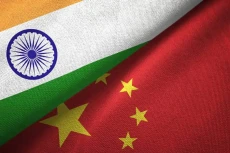
NEW DELHI - Political map of Asia re-warmed again. It's a frightening prospect, India and China going to war. The countries are home to 2.5 billion people, a long and sometimes disputed border, which they've fought wars over, and each have nuclear weapons.
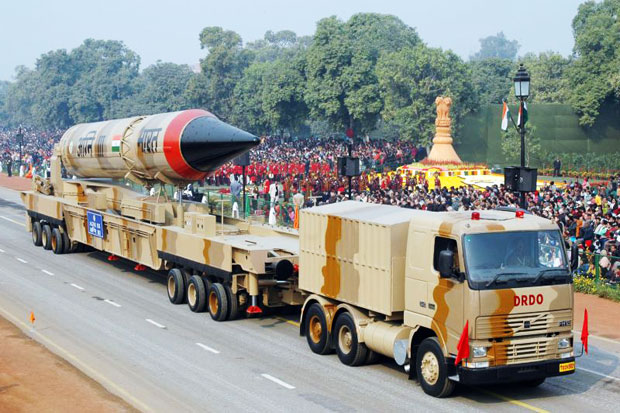
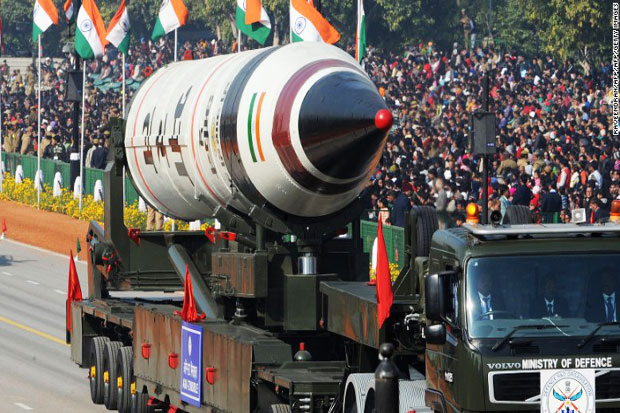
And India announced last month it successfully tested the Agni-V intercontinental ballistic missile (ICBM), which could theoretically deliver a nuke to Beijing. Indian Prime Minister Narendra Modi tweeted the accomplishment "makes every Indian proud."
But some in China see the test as a provocation. And provocations can make the region less stable, which can lead to hostilities, says Victor Gao, the director of the China National Association of International Studies.
"To contemplate a war, especially involving involving nuclear weapons, against each other is completely ludicrous. And it's a misallocation of resources," Gao told to CNN.
![India Create China Restless Again]()
Hua Chunying, a spokeswoman for China's Foreign Ministry, responded to a question about the missile launch by noting UN Security Council regulations regarding nuclear capable ballistic missiles and stressing that the two countries "are not rivals for competition but partners for cooperation."
An Indian Foreign Ministry spokesman responded by telling CNN that its "strategic capabilities are not targeted against any particular country," and that the country abides by its international obligations. But not everyone shares such a sanguine view of the Sino-Indian relationship.
"Everyone should be interested in and concerned about India's successful ICBM test, including China because it's within range of this new missile and because it especially of the major Asian countries understands the dangers of nationalism and its volatility," says Yvonne Chiu, a professor of at Hong Kong University.
![India Create China Restless Again]()
India and China both maintain what's called a "no first use" policy as part of their nuclear doctrine. The policy means exactly what it sounds like -- in the event of a war, the country won't use nuclear weapons unless they're attacked by an enemy using nuclear weapons. But India's hawkish defense minister, Manohar Parrikar, publicly mused in November whether India should be bound by the "no first use" policy.
"If a written down policy exists, or you take a stand on a nuclear aspect, I think you are truly giving away your strength in nuclear," Parrikar said. "Why should I bind myself? I should say I'm a responsible nuclear power and I will not use it irresponsibly."
It's important to note that Parrikar said those were his personal opinions, and that India's nuclear doctrine was not changing. But Parrikar isn't the only one in India questioning the "no first use" doctrine.
"Nuclear deterrence is a curious thing -- it succeeds when it creates doubts in the mind of the adversary state, and doubt is created in the nuclear realm by being precisely ambiguous about your intentions, your capabilities and about the possibilities of its use," said Bharat Karnad
And India announced last month it successfully tested the Agni-V intercontinental ballistic missile (ICBM), which could theoretically deliver a nuke to Beijing. Indian Prime Minister Narendra Modi tweeted the accomplishment "makes every Indian proud."
But some in China see the test as a provocation. And provocations can make the region less stable, which can lead to hostilities, says Victor Gao, the director of the China National Association of International Studies.
"To contemplate a war, especially involving involving nuclear weapons, against each other is completely ludicrous. And it's a misallocation of resources," Gao told to CNN.

Hua Chunying, a spokeswoman for China's Foreign Ministry, responded to a question about the missile launch by noting UN Security Council regulations regarding nuclear capable ballistic missiles and stressing that the two countries "are not rivals for competition but partners for cooperation."
An Indian Foreign Ministry spokesman responded by telling CNN that its "strategic capabilities are not targeted against any particular country," and that the country abides by its international obligations. But not everyone shares such a sanguine view of the Sino-Indian relationship.
"Everyone should be interested in and concerned about India's successful ICBM test, including China because it's within range of this new missile and because it especially of the major Asian countries understands the dangers of nationalism and its volatility," says Yvonne Chiu, a professor of at Hong Kong University.
India and China both maintain what's called a "no first use" policy as part of their nuclear doctrine. The policy means exactly what it sounds like -- in the event of a war, the country won't use nuclear weapons unless they're attacked by an enemy using nuclear weapons. But India's hawkish defense minister, Manohar Parrikar, publicly mused in November whether India should be bound by the "no first use" policy.
"If a written down policy exists, or you take a stand on a nuclear aspect, I think you are truly giving away your strength in nuclear," Parrikar said. "Why should I bind myself? I should say I'm a responsible nuclear power and I will not use it irresponsibly."
It's important to note that Parrikar said those were his personal opinions, and that India's nuclear doctrine was not changing. But Parrikar isn't the only one in India questioning the "no first use" doctrine.
"Nuclear deterrence is a curious thing -- it succeeds when it creates doubts in the mind of the adversary state, and doubt is created in the nuclear realm by being precisely ambiguous about your intentions, your capabilities and about the possibilities of its use," said Bharat Karnad
(rnz)