




Seoul Push Pyogyang for Give Up

Jum'at, 22 Januari 2016 - 15:43 WIB
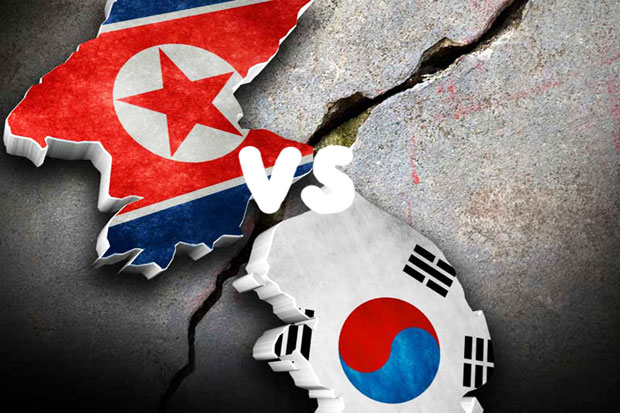
Seoul Push Pyogyang for Give Up
A
A
A
SEOUL - South Korea vowed to pressure and sanction the North Korea to make it give up its nuclear ambitions after Pyongyang's nuclear test earlier this month.
President Park Geun-hye was briefed by foreign, defense and unification ministers about their policy directions in 2016, which focused on resolving Pyongyang's nuclear issue through stronger sanctions and pressure rather than dialogue and consultations.
"Right now, it is not important to hastily hold talks with North Korea (DPRK)," Park told the briefing, Friday (22/1) as reported Xinhua.
He said that a fast way of improving inter Korean relations is a principled approach that continues to send a consistent message to the unpredictable and spontaneous DPRK when implementing all of the policies.
Park instructed officials to focus all of their diplomatic capability on making strong and effective sanctions against Pyongyang drawn up at the UN Security Council as well as bilateral and multilateral sanctions taken in addition to the UN resolution.
The president noted that it would be important to create an environment that can force change from the North Korea.
Park's remarks represent a sharp turn from last year's policy direction that was centered on ending the era of the divided Korean peninsula and preparing for a new era of a reunified Korea through dialogue and cooperation.
The turn into a tougher stance came as the DPRK claimed on Jan. 6 that it had tested its first hydrogen bomb. It marked the fourth nuclear test in the DPRK and the second since top leader Kim Jong Un took power in 2011.
In order to force the DPRK's change in its nuclear ambitions, Park said her country will attempt six-party talks that exclude the DPRK. The talks to denuclearize the peninsula, which involve the two Koreas, China, the United States, Japan and Russia, have been halted since late 2008.
Park said that although the six-party talks were effective as a tool in the past, the effectiveness is now called into question as the talks haven't been held for long and helped little denuclearize the Korean peninsula.
The South Korean foreign ministry submitted its plan to Park that will place top priority on resolving the DPRK's nuclear issue by diplomatically pressuring Pyongyang to abandon its nuclear weapons program.
Seoul will pursue the strongest-ever resolution at the UN Security Council, while increasing the trilateral dialogue channels with Washington, Beijing and Tokyo. The country will also call on China and Russia to play constructive roles in resolving the peninsula's nuclear issue.
To better cope with the DPRK's nuclear and ballistic missile threats, South Korea plans to deepen cooperation with the United States in sharing military intelligence on a real-time basis.
The intelligence on Pyongyang's nuclear and missile threats will be shared through a link system, called Link-16, in Osan, 40 km south of Seoul where the Osan Air Base is located. The air base is home to South Korea's Air Force command and the U.S. Seventh Fleet command.
The South Korean military will launch a project this year to develop five reconnaissance satellites by early 2020s at a time earlier than scheduled, while setting up a research center under the agency for defense development (ADD) to develop technology against the DPRK's cyber attacks.
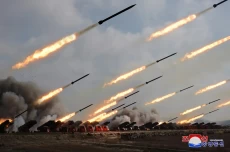
Following the DPRK's nuclear test, tensions rose on the peninsula, with both South Korea and the DPRK resuming propaganda broadcasts from loudspeakers along the border. The DPRK began scattering anti South Korea leaflets by balloons into some of regions close to the inter-Korean border.
Combined forces of Seoul and Washington will hold their annual war games, believed to kick off in early March, to implement the so called "4D operation" plan for the first time. It refers to a joint military operation to destroy the DPRK's nuclear and ballistic missile programs in time of emergency.
The unification ministry in charge of inter Korean affairs will seek policy alternatives to induce the DPRK to end its nuclear program, establishing a permanent task force under the ministry that works on ways of making progress in denuclearization efforts.
The policy alternatives, which are to be drawn up with by the task force, will be used, or suggested, during future inter-Korean talks, but they seemly not very likely to be used in the near future as Seoul focuses on pressure and sanctions against Pyongyang.
President Park Geun-hye was briefed by foreign, defense and unification ministers about their policy directions in 2016, which focused on resolving Pyongyang's nuclear issue through stronger sanctions and pressure rather than dialogue and consultations.
"Right now, it is not important to hastily hold talks with North Korea (DPRK)," Park told the briefing, Friday (22/1) as reported Xinhua.
He said that a fast way of improving inter Korean relations is a principled approach that continues to send a consistent message to the unpredictable and spontaneous DPRK when implementing all of the policies.
Park instructed officials to focus all of their diplomatic capability on making strong and effective sanctions against Pyongyang drawn up at the UN Security Council as well as bilateral and multilateral sanctions taken in addition to the UN resolution.
The president noted that it would be important to create an environment that can force change from the North Korea.
Park's remarks represent a sharp turn from last year's policy direction that was centered on ending the era of the divided Korean peninsula and preparing for a new era of a reunified Korea through dialogue and cooperation.
The turn into a tougher stance came as the DPRK claimed on Jan. 6 that it had tested its first hydrogen bomb. It marked the fourth nuclear test in the DPRK and the second since top leader Kim Jong Un took power in 2011.
In order to force the DPRK's change in its nuclear ambitions, Park said her country will attempt six-party talks that exclude the DPRK. The talks to denuclearize the peninsula, which involve the two Koreas, China, the United States, Japan and Russia, have been halted since late 2008.
Park said that although the six-party talks were effective as a tool in the past, the effectiveness is now called into question as the talks haven't been held for long and helped little denuclearize the Korean peninsula.
The South Korean foreign ministry submitted its plan to Park that will place top priority on resolving the DPRK's nuclear issue by diplomatically pressuring Pyongyang to abandon its nuclear weapons program.
Seoul will pursue the strongest-ever resolution at the UN Security Council, while increasing the trilateral dialogue channels with Washington, Beijing and Tokyo. The country will also call on China and Russia to play constructive roles in resolving the peninsula's nuclear issue.
To better cope with the DPRK's nuclear and ballistic missile threats, South Korea plans to deepen cooperation with the United States in sharing military intelligence on a real-time basis.
The intelligence on Pyongyang's nuclear and missile threats will be shared through a link system, called Link-16, in Osan, 40 km south of Seoul where the Osan Air Base is located. The air base is home to South Korea's Air Force command and the U.S. Seventh Fleet command.
The South Korean military will launch a project this year to develop five reconnaissance satellites by early 2020s at a time earlier than scheduled, while setting up a research center under the agency for defense development (ADD) to develop technology against the DPRK's cyber attacks.
Following the DPRK's nuclear test, tensions rose on the peninsula, with both South Korea and the DPRK resuming propaganda broadcasts from loudspeakers along the border. The DPRK began scattering anti South Korea leaflets by balloons into some of regions close to the inter-Korean border.
Combined forces of Seoul and Washington will hold their annual war games, believed to kick off in early March, to implement the so called "4D operation" plan for the first time. It refers to a joint military operation to destroy the DPRK's nuclear and ballistic missile programs in time of emergency.
The unification ministry in charge of inter Korean affairs will seek policy alternatives to induce the DPRK to end its nuclear program, establishing a permanent task force under the ministry that works on ways of making progress in denuclearization efforts.
The policy alternatives, which are to be drawn up with by the task force, will be used, or suggested, during future inter-Korean talks, but they seemly not very likely to be used in the near future as Seoul focuses on pressure and sanctions against Pyongyang.
(rnz)