




Huge Antarctic Glacier Just Faster Melted

Kamis, 23 Februari 2017 - 07:04 WIB
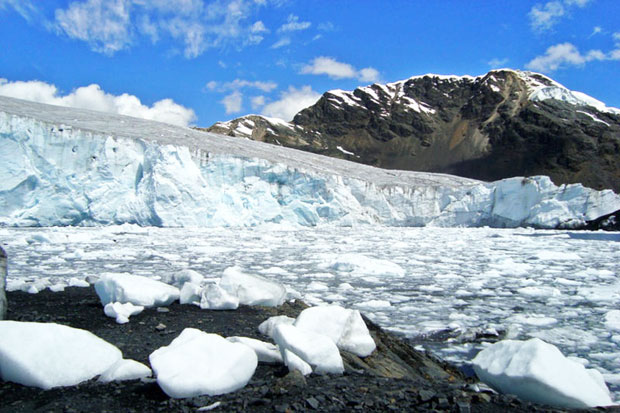
Huge Antarctic Glacier Just Faster Melted
A
A
A
MELBOURNE - An Australian team of international scientists is hoping to discover whether there's something more than warmer temperatures could cause Antarctic's glaciers to melt faster than expected.
"The future of the Antarctic ice sheet is really important for everybody at the moment. We don't know how much ice it's going to lose over the next decades, and it's going to contribute to sea-level rise," glaciologist, Dr Sue Cook told.
Glaciers cover just a 10th of the Earth's land surface, but they store around three quarters of the planet's fresh water. That means that they play a crucial effect on climate change.
"Being able to tell how much it's going to contribute to that is going to be really important for everybody," Dr Cook said.
If they continue to melt at their current rate, it's estimated that the ice sheets alone will add around 50 centimetres to sea level by the end of this century.
Why and how this is happening has serious implications for low-lying cities and island nations. More to disintegrating glaciers than warmer temperatures. The fate of glaciers rests on a massive balancing act between snowfall and ice melt.
"The ice sheet is gaining mass every year as snow falls on to the upper layers, and as it moves downstream and encounters the ocean it'll start melting where it contacts water, and then lose icebergs as well. So, they're the two ways it's losing ice," Cook explained.
But there's more to this than just warmer temperatures melting ice. Research in Greenland has shown that most of the loss from its ice sheet comes from meltwater speeding up the flow of its glaciers.
Vivid blue meltwater from surface lakes on the glacier is disappearing down cracks and fissures and flowing under the ice.
"As the water goes down a crevasse, the pressure of the water can open it up. If you have a big enough volume of water, that crevasse can go all the way to the base and then the water is instantly injected into the base of the ice sheet. And that changes how fast it's flowing," Cook said.
If water gets to the base, where ice grinds against bedrock, it can lubricate the glacier and make it flow faster, accelerating ice sheet loss.
"The future of the Antarctic ice sheet is really important for everybody at the moment. We don't know how much ice it's going to lose over the next decades, and it's going to contribute to sea-level rise," glaciologist, Dr Sue Cook told.
Glaciers cover just a 10th of the Earth's land surface, but they store around three quarters of the planet's fresh water. That means that they play a crucial effect on climate change.
"Being able to tell how much it's going to contribute to that is going to be really important for everybody," Dr Cook said.
If they continue to melt at their current rate, it's estimated that the ice sheets alone will add around 50 centimetres to sea level by the end of this century.
Why and how this is happening has serious implications for low-lying cities and island nations. More to disintegrating glaciers than warmer temperatures. The fate of glaciers rests on a massive balancing act between snowfall and ice melt.
"The ice sheet is gaining mass every year as snow falls on to the upper layers, and as it moves downstream and encounters the ocean it'll start melting where it contacts water, and then lose icebergs as well. So, they're the two ways it's losing ice," Cook explained.
But there's more to this than just warmer temperatures melting ice. Research in Greenland has shown that most of the loss from its ice sheet comes from meltwater speeding up the flow of its glaciers.
Vivid blue meltwater from surface lakes on the glacier is disappearing down cracks and fissures and flowing under the ice.
"As the water goes down a crevasse, the pressure of the water can open it up. If you have a big enough volume of water, that crevasse can go all the way to the base and then the water is instantly injected into the base of the ice sheet. And that changes how fast it's flowing," Cook said.
If water gets to the base, where ice grinds against bedrock, it can lubricate the glacier and make it flow faster, accelerating ice sheet loss.
(rnz)