




Anies Indigenous Speech

Sabtu, 21 Oktober 2017 - 10:55 WIB
Anies Indigenous Speech
A
A
A
by: Mahfud MD
Chairman of Association of Teachers of Constitutional Law and State Administration Law (APHTN-HAN)
Chairman of Constitutional Court (2008-2013)
In controversy about indigenous issues, perhaps, at juridically Anies Baswedan is not wrong. But, perhaps also, politically unwise.
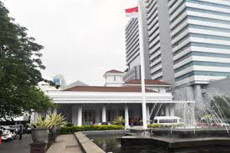
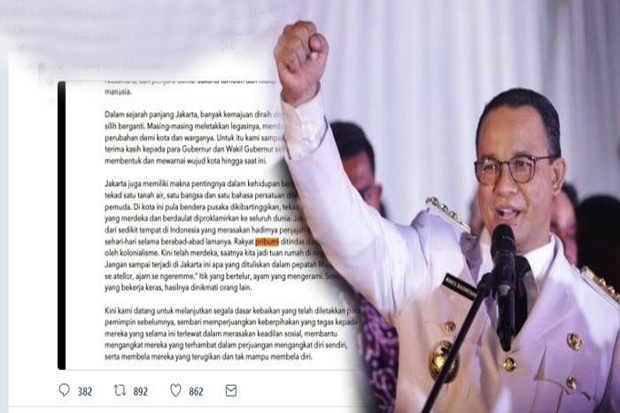
Anies Baswedan speech at City Hall several hours after, together with Sandiaga Uno was inaugurated as governor and vice governor of Jakarta Capital City Special Region on Monday (10/16) which provoked controversy. Anies' statement that "indigeneous" should be independent from colonialism according to the promise of state independence has disturbed public attention. Some even reported Anies to the Criminal Investigation Police as perpetrators of crime under Law No. 40/2008 on the Elimination of Race and Ethnic Discrimination.
On the invasion of many questions, Friday (20/10) yesterday afternoon, via Twitter, I whistle as I quoted above. In essence, maybe Anies is not wrong legally. However, it may be politically wrong. How is the explanation?
Actually, the native term still exists and is not prohibited in our law as a legal heritage that has been in effect since the Dutch colonial era. Initially, in 1848 the Dutch colonial government issued a legal politics about the civil law enforcement in the Dutch East Indies (a term for Indonesia before independence) which was then outlined in Article 163 Indische Staatsregeling (IS).
IS is a constitutional law for the Dutch East Indies which at that time became the official designation for Indonesia as a Dutch colony. Article 163 The IS divides the population of Indonesia into three groups: Europe, the alien East, and the indigenous or bumiputra (translation of the inlander term).
For the three classes are applied different types of law. For the European class, Western civil law applies codified in the Civil Code (Criminal Code), for the other two classes applies the respective customary law, including Islamic law to the Muslim population. Residents of one resident group may declare themselves subject to the laws of other population groups.
The classification of the population into the three castes can be seen as ugly or good, depending on which angle it sees. Some say it is bad because it reflects the insult to the native or inlander people who are considered ignorant and backward. However, there are those who consider it good because it means the Dutch government at that time appreciated the law that lives in the legal consciousness of indigenous communities.
At that time the Dutch government could never succeed in enforcing the civil law of the West against the natives because the natives had their own laws adhered to its diversity. That is why the Dutch government established the legal policy set forth in Article 163 IS so that the Indonesian people can submit and enforce its own laws.
It is unnecessary to look at the conclusion now, whether Article 163 IS is ugly or bad, because what we are talking about today is the fact. In fact, until now Article 163 IS is still valid, enacted under Article II of the Transitional Rules of the 1945 Constitution, and has never been revoked either the norms or the institutionalization.
Now we have a religious court or enforce customary law in the community which is actually institutionalized from an "inlander" law that is specific to indigenous groups. So there is no legal problem to call the word native as long as it is intended for the already independent Indonesian population.
Whereas if Anies's statement is linked to the violation of Law No. 40/2008 it is also not easy to find his crime. Anies is reported, for example, to violate Article 4 letter b of number 2, namely "To show hatred or hatred to people because of racial and ethnic differences in the form of deeds ... to give speeches, expresses or throws certain words in public places or other audible places". The threat of violation of the provisions of Article 4 letter b number 2 is, according to Article 16, shall be subject to imprisonment for five years and/or a maximum fine of Rp500,000,000.
Legally it would be difficult to find an Anies crime from his speech because Anies only mentions "indigeneous" and there is no expression of hatred against certain races and ethnicities. According to Article 1 paragraph 2 of Law No. 40/2008, race is a class of people based on physical characteristics and lineage, while ethnicity (according to Article 1 point 3) is a classification of human beings based on beliefs, values, customs, customs, norms, history, geography, and kinship relationships.
The native word used by Anies, it seems nothing related, especially to a particular race and ethnicity as defined in Article 1 point 2 and 3 of Law No. 40/2008. Which part of the "native speech" is on a particular race or ethnicity?
Likewise, although juridically it may be true, but politically speaking Anies's speech is unwise for two reasons. Firstly, Anies should realize that his speech by a group of people will be regarded as an attitude of racially and ethnically certain groups because the term campaigns ahead of the 2017 Jakarta Gubernatorial Election has touched on the issue of race and ethnicity in so-called SARA issues.
Secondly, since the reform era we have tried to eliminate native and non-indigenous titles because, even though civil law is not abolished, the titles are politically racist and discriminatory.
In President BJ Habibie era, issued Presidential Instruction Number 26/1998 which prohibits the use of the term indigenes and and non indigenes in government activities. In the era of President Abdurrahman Wahid issued Presidential Decree No. 6/2000 which contains the revocation of Presidential Decree No. 14/1967 because Presidential Decree No. 14/1967 prohibits the implementation of Chinese religious activities, beliefs and customs.
As for President Susilo Bambang Yudhoyono, in addition to issuing Law No. 40/2008, also issued Presidential Decree No.12/2014 which changed the Chinese title into Chinese.
However, while not directly shooting certain races and ethnicities, Anies's "indigeneous speech" was politically statement crashing into the presidential decree and the presidential decree. Violation of the presidential decree or presidential decree is not necessarily a criminal offense, but can be felt as a violation of political fatsun. Supposedly, Anies's first step as governor is not to give the impression of continuing the attack, but to start with an embracing embrace to all citizens of Jakarta.
Chairman of Association of Teachers of Constitutional Law and State Administration Law (APHTN-HAN)
Chairman of Constitutional Court (2008-2013)
In controversy about indigenous issues, perhaps, at juridically Anies Baswedan is not wrong. But, perhaps also, politically unwise.
Anies Baswedan speech at City Hall several hours after, together with Sandiaga Uno was inaugurated as governor and vice governor of Jakarta Capital City Special Region on Monday (10/16) which provoked controversy. Anies' statement that "indigeneous" should be independent from colonialism according to the promise of state independence has disturbed public attention. Some even reported Anies to the Criminal Investigation Police as perpetrators of crime under Law No. 40/2008 on the Elimination of Race and Ethnic Discrimination.
On the invasion of many questions, Friday (20/10) yesterday afternoon, via Twitter, I whistle as I quoted above. In essence, maybe Anies is not wrong legally. However, it may be politically wrong. How is the explanation?
Actually, the native term still exists and is not prohibited in our law as a legal heritage that has been in effect since the Dutch colonial era. Initially, in 1848 the Dutch colonial government issued a legal politics about the civil law enforcement in the Dutch East Indies (a term for Indonesia before independence) which was then outlined in Article 163 Indische Staatsregeling (IS).
IS is a constitutional law for the Dutch East Indies which at that time became the official designation for Indonesia as a Dutch colony. Article 163 The IS divides the population of Indonesia into three groups: Europe, the alien East, and the indigenous or bumiputra (translation of the inlander term).
For the three classes are applied different types of law. For the European class, Western civil law applies codified in the Civil Code (Criminal Code), for the other two classes applies the respective customary law, including Islamic law to the Muslim population. Residents of one resident group may declare themselves subject to the laws of other population groups.
The classification of the population into the three castes can be seen as ugly or good, depending on which angle it sees. Some say it is bad because it reflects the insult to the native or inlander people who are considered ignorant and backward. However, there are those who consider it good because it means the Dutch government at that time appreciated the law that lives in the legal consciousness of indigenous communities.
At that time the Dutch government could never succeed in enforcing the civil law of the West against the natives because the natives had their own laws adhered to its diversity. That is why the Dutch government established the legal policy set forth in Article 163 IS so that the Indonesian people can submit and enforce its own laws.
It is unnecessary to look at the conclusion now, whether Article 163 IS is ugly or bad, because what we are talking about today is the fact. In fact, until now Article 163 IS is still valid, enacted under Article II of the Transitional Rules of the 1945 Constitution, and has never been revoked either the norms or the institutionalization.
Now we have a religious court or enforce customary law in the community which is actually institutionalized from an "inlander" law that is specific to indigenous groups. So there is no legal problem to call the word native as long as it is intended for the already independent Indonesian population.
Whereas if Anies's statement is linked to the violation of Law No. 40/2008 it is also not easy to find his crime. Anies is reported, for example, to violate Article 4 letter b of number 2, namely "To show hatred or hatred to people because of racial and ethnic differences in the form of deeds ... to give speeches, expresses or throws certain words in public places or other audible places". The threat of violation of the provisions of Article 4 letter b number 2 is, according to Article 16, shall be subject to imprisonment for five years and/or a maximum fine of Rp500,000,000.
Legally it would be difficult to find an Anies crime from his speech because Anies only mentions "indigeneous" and there is no expression of hatred against certain races and ethnicities. According to Article 1 paragraph 2 of Law No. 40/2008, race is a class of people based on physical characteristics and lineage, while ethnicity (according to Article 1 point 3) is a classification of human beings based on beliefs, values, customs, customs, norms, history, geography, and kinship relationships.
The native word used by Anies, it seems nothing related, especially to a particular race and ethnicity as defined in Article 1 point 2 and 3 of Law No. 40/2008. Which part of the "native speech" is on a particular race or ethnicity?
Likewise, although juridically it may be true, but politically speaking Anies's speech is unwise for two reasons. Firstly, Anies should realize that his speech by a group of people will be regarded as an attitude of racially and ethnically certain groups because the term campaigns ahead of the 2017 Jakarta Gubernatorial Election has touched on the issue of race and ethnicity in so-called SARA issues.
Secondly, since the reform era we have tried to eliminate native and non-indigenous titles because, even though civil law is not abolished, the titles are politically racist and discriminatory.
In President BJ Habibie era, issued Presidential Instruction Number 26/1998 which prohibits the use of the term indigenes and and non indigenes in government activities. In the era of President Abdurrahman Wahid issued Presidential Decree No. 6/2000 which contains the revocation of Presidential Decree No. 14/1967 because Presidential Decree No. 14/1967 prohibits the implementation of Chinese religious activities, beliefs and customs.
As for President Susilo Bambang Yudhoyono, in addition to issuing Law No. 40/2008, also issued Presidential Decree No.12/2014 which changed the Chinese title into Chinese.
However, while not directly shooting certain races and ethnicities, Anies's "indigeneous speech" was politically statement crashing into the presidential decree and the presidential decree. Violation of the presidential decree or presidential decree is not necessarily a criminal offense, but can be felt as a violation of political fatsun. Supposedly, Anies's first step as governor is not to give the impression of continuing the attack, but to start with an embracing embrace to all citizens of Jakarta.
(rnz)